

Alternative names for testosterone
Testo (Trade names of preparations include: Sustanon®, Nebido®, Tostran®, Testogel®, Testavan®, Testim®); 4-androsten-17β-ol-3-one
What is testosterone?
Testosterone is mainly produced by the gonads (by the Leydig cells in testes in men and in small amounts by the ovaries in women). Small quantities are also produced by the adrenal glands in both sexes. It is an androgen, meaning that it stimulates the development of male characteristics.
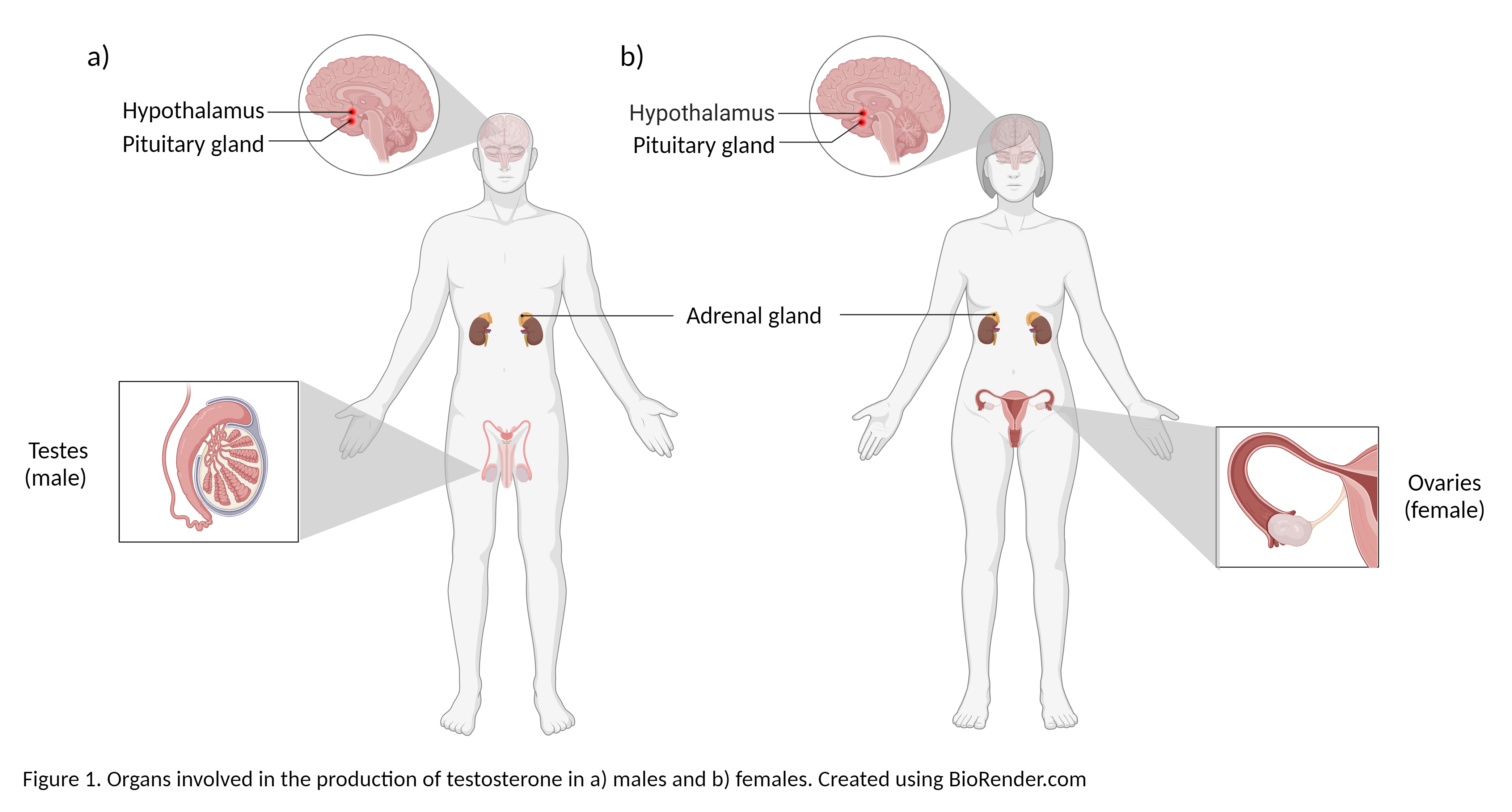
In men, testosterone is required for normal development of the male internal and external reproductive organs during foetal development. It causes many of the changes seen in boys during puberty (including an increase in muscle mass, growth of body and pubic hair, enlargement of the penis and prostate gland, and changes in sexual and aggressive behaviour). In adult life, testosterone is essential for the production of sperm; to signal the body to make new blood cells; to ensure that muscles and bones stay strong; to keep the heart and blood vessels healthy and to enhance libido. To affect these changes, testosterone is often converted within tissues (e.g. prostate gland) into another more powerful androgen called dihydrotestosterone. Small amounts of testosterone are also converted into oestradiol in some tissues (e.g. fat) by the enzyme aromatase.
In women, testosterone is produced by the ovaries and adrenal glands. The majority of testosterone produced in the ovary is converted to the principle female sex hormone, oestradiol.
How is testosterone controlled?
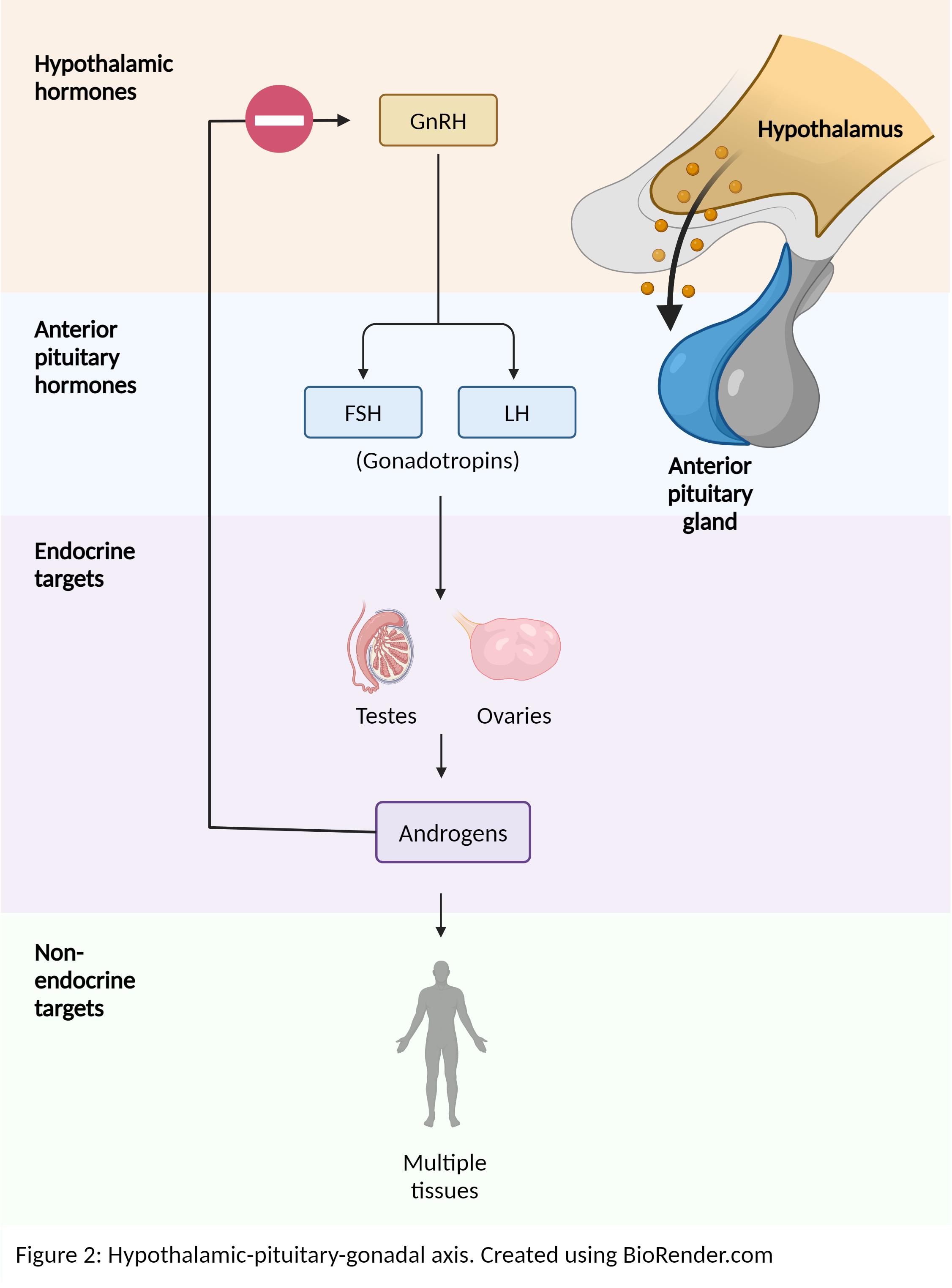
The regulation of testosterone production is tightly controlled to maintain normal levels. Testosterone levels are usually highest in the morning and fall during the day. The hypothalamus and the pituitary gland are important in controlling the amount of testosterone produced by the testes. In response to gonadotrophin-releasing hormone (GnRH) from the hypothalamus, the pituitary gland produces luteinising hormone, which travels in the blood-stream to the gonads and stimulates the production and release of testosterone.
If blood levels of testosterone are too high a level, this feeds back to reduce the production of gonadotrophin-releasing hormone (GnRH) by the hypothalamus and of luteinising hormone by the pituitary gland. This is an example of a ‘negative feedback’ to maintain normal hormone levels. Levels of testosterone will therefore fall to normal levels, negative feedback on the hypothalamus and pituitary gland will be reduced, and they will resume normal secretion of gonadotrophin-releasing hormone and luteinising hormone, respectively.
What happens if I have too much testosterone?
The effect that excess testosterone has on the body depends on both age and sex. It is rare that adult men will develop a disorder in which they produce too much testosterone and it is often difficult to spot that an adult male has too much testosterone.
More obviously, young children with too much testosterone may enter a false growth spurt and show signs of early puberty and young girls may experience atypical changes to their genitalia. In both males and females, too much testosterone can lead to precocious puberty.
In women, high blood levels of testosterone may also be an indicator of Polyendocrine Metabolic Ovarian Syndrome (PMOS), previously known as polycystic ovary syndrome. Women with this condition may notice increased acne, body and facial hair (called hirsutism), balding at the front of the hairline in a male pattern, increased muscle bulk and a deepened voice. There are also several conditions that cause the body to produce too much testosterone. These include androgen resistance, congenital adrenal hyperplasia and some ovarian cancers.
The use of anabolic steroids (synthetic androgenic hormones) shuts down the release of luteinising hormone and follicle stimulating hormone from the pituitary gland, which in turn decreases the amount of natural testosterone and sperm produced within the testes. In men, prolonged exposure to anabolic steroids can result in subfertility, a decreased sex drive (libido), shrinking of the testes and breast development (gynaecomastia). Liver damage may result from its prolonged attempts to detoxify the anabolic steroids. Behavioural changes (such as increased irritability) may also be observed. Undesirable reactions also occur in women who take anabolic steroids regularly, as a high concentration of testosterone, either natural or manufactured, can cause masculinisation (virilisation) of women.
What happens if I have too little testosterone?
If testosterone deficiency occurs during foetal development, then male characteristics may not completely develop. If testosterone deficiency occurs during puberty, a boy’s growth may slow and no growth spurt will be seen. The child may have impaired development of pubic hair, growth of the penis / testes, and lack deepening of the voice. Around the time of puberty, boys with too little testosterone may also have less than normal strength and endurance, and their arms and legs may continue to grow out of proportion to their spine (termed eunuchoid body proportions).
In adult men, low testosterone may lead to a reduction in muscle bulk and loss of body hair. Testosterone levels in men decline naturally as they age (termed ‘late-onset hypogonadism’). In the media, this is sometimes referred to as the ‘male menopause’ or ‘andropause’. Low testosterone levels can cause mood disturbances, increased body fat, loss of muscle tone, inadequate erections and poor sexual performance, thinning of the bones (osteoporosis), difficulty with concentration, memory loss, sleep difficulties and increased risk of cardiovascular problems.
Treatment with testosterone
In men who have insufficient testosterone levels, it may be necessary to replace their body’s natural testosterone with prescribed testosterone formulations. Testosterone can also be used in boys who do not go through puberty spontaneously to induce pubertal changes. Testosterone replacement in patients with low testosterone levels back up to normal levels can improve psychological, muscle, bone and heart health. Testosterone may also be used in the management of transgender men (assigned female sex at birth but has male gender identity).
Testosterone replacement can be administered as a gel applied once daily. It can also be used as an intramuscular injection, usually given at a 3-weekly or 3-monthly interval depending on the preparation. Oral and nasal preparations are in development and could be alternative options in future. In addition to monitoring for resolution of a patient’s symptoms of low testosterone, an endocrinologist will also monitor for side-effects of testosterone replacement. These could include stimulation of the blood count such that it can be too high and thus cause the blood to be too thick and risk excess clotting. The prostate gland is also monitored in case that any abnormalities develop, as this can also mean that testosterone replacement may not be safe. Some preparations can affect the liver, and this may also need monitoring.